
ICPC EUC 2026 HOSTS
The EUC 2025 is hosted by the University of Warsaw and it is organized by MIM – the Faculty of Mathematics, Informatics and Mechanics of the University of Warsaw, Faculty of Management of the University of Warsaw and Foundation for the Development of Informatics.

University of Warsaw
The University of Warsaw is the largest and one of the leading universities in Poland. Its core mission is the unity of research and teaching. The University also fulfils an important social and cultural role by contributing to the education of future leaders and promoting knowledge within society. Together with the Jagiellonian University, the University of Warsaw has for many years been the undisputed leader among Polish universities. The high qualifications of its academic staff, its wide range of study programmes, and its unique faculties attract students not only from Poland but also from abroad.
The University of Warsaw offers over 250 first-cycle, second-cycle, and long-cycle degree programmes in the fields of humanities, social sciences, exact and natural sciences. These include interdisciplinary programmes, 50 programmes taught in English, 5 joint degree programmes, 11 programmes with elements of medical sciences, 7 programmes with elements of engineering and technical sciences, and 7 programmes leading to the title of Engineer.
In 2024, 1,702 doctoral students were enrolled in the University’s doctoral schools. Of these, 129 studied at the Interdisciplinary Doctoral School, 496 at the Doctoral School of Humanities, 496 at the Doctoral School of Social Sciences, and 581 at the Doctoral School of Exact and Natural Sciences.
In total, nearly 40,000 students study at the University of Warsaw.
The role of the University as a centre influencing Polish science, culture, and the country’s future is difficult to overestimate. Many distinguished alumni who have studied at the University since its founding in 1816 have made their mark on world history. Among them are future Nobel Prize laureates: Henryk Sienkiewicz, Czesław Miłosz, Józef Rotblat (winner of the Nobel Peace Prize and founder of the international movement of scientists for the elimination of weapons of mass destruction), Menachem Begin (Nobel Peace Prize laureate and future Prime Minister of Israel), and Leonid Hurwicz, who was awarded the Nobel Prize in Economic Sciences.
Today, the image of the University of Warsaw combines tradition and modernity, reflected in its three campuses. The historic main campus, housing faculties of arts and social sciences, is located in the heart of the city. Its beautifully restored buildings, elegant interiors, and unique atmosphere make it one of the most frequently visited tourist sites in Warsaw. The modern side of the University is represented by the campus in the Służewiec district, home to the Faculty of Management, and the Ochota campus, where many scientific and research faculties are located including the Faculty of Mathematics, Informatics and Mechanics.


The Faculty of Mathematics, Informatics and Mechanics (MIM)
The Ochota district is also home to the Faculty of Mathematics, Informatics and Mechanics (MIM). With more than 270 academic staff and researchers, the Faculty is engaged in a broad range of research areas, from fundamental ones in pure mathematics and theoretical computer science to applied mathematics, practical areas of informatics and Machine Learning.
The Faculty consists of three institutes: Mathematics, Informatics, and Applied Mathematics and Mechanics. The largest of these is the Institute of Informatics, which employs over 130 staff members. The Faculty’s strengths lie in selected areas of mathematics and computer science, traditionally excelling in algorithmics, computer logic, and machine learning. It also continually expands its research profile by focusing on deeply interdisciplinary fields such as financial mathematics and bioinformatics.
Nearly 100 PhD students are currently involved in diverse research projects under the supervision of the Faculty’s academic staff and researchers.
The Faculty has approximately 1,500 undergraduate students who follow a wide variety of courses offered at all three levels of higher education (bachelor’s, master and doctoral) Students enroll for Mathematics, Informatics, Bioinformatics and Systems Biology programmes, sometimes combining two into a demanding and prestigious double diploma curriculum. These programmes cover numerous topics in computer science — both theoretical and practical — as well as in pure, applied, and financial mathematics. Many offered subjects, and one entire graduate programme, Machine Learning, are conducted solely in English, attracting numerous international students.
Students of MIM have achieved outstanding success in the ACM International Collegiate Programming Contest, winning the World Finals twice (2003 and 2007) and placing second in 2012 and 2017. The University of Warsaw is the only university in the world to have advanced to the World Finals 31 times in a row.
Each year, more than 30% of first-year undergraduates at the Faculty are former finalists and laureates of Polish Mathematical Olympiad or Polish Olympiad in Informatics. All students benefit from studying alongside some of the brightest young talents, creating an inspiring and intellectually rewarding environment. The Faculty’s courses and degree programmes are designed to meet the needs and ambitions of students with diverse goals, but united by a shared passion for mathematics, computer science and bioinformatics.


Faculty of Management
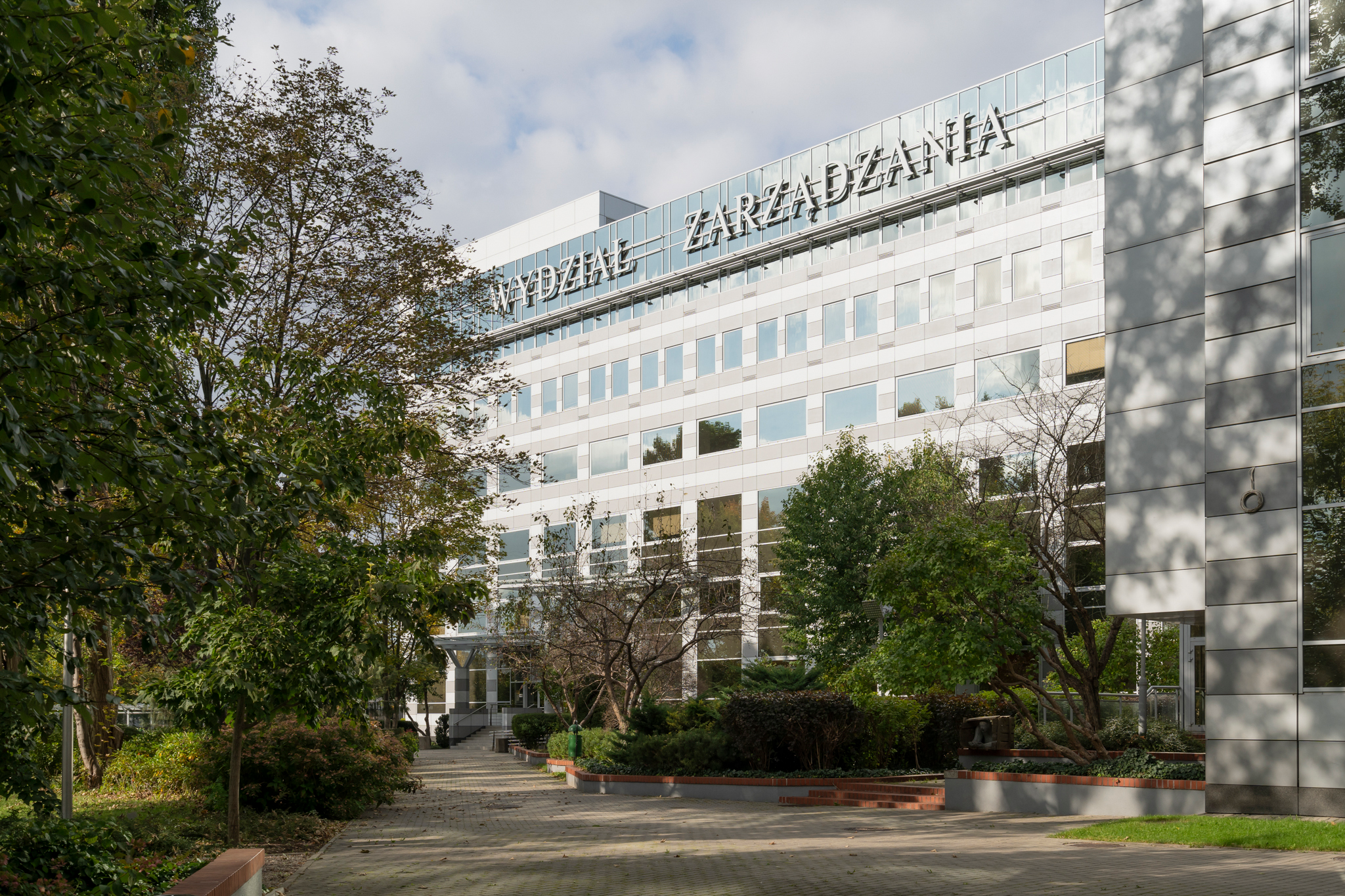
Participants of ICPC EUC 2026 will also have the opportunity to visit the Faculty of Management, where the contest itself will take place. The Faculty is one of the prides of the University of Warsaw, renowned for the high standard of education it provides. Established in 1972 as part of the University, it is the oldest management school in Central and Eastern Europe and today ranks among the most respected centres for management education and research in Poland. In the latest 2025 Eduniversal ranking of the world’s best business schools, the Faculty of Management at the University of Warsaw was distinguished as one of the top 5 business schools in the region of Central and Eastern Europe.
Since its inception, the Faculty of Management has aimed to educate highly qualified managers for Polish business as well as for local and central government institutions. The high standard of education is ensured by its outstanding academic staff, whose research meets the highest contemporary standards in fields such as economics, law, management theory, quantitative methods, marketing, finance, sociology, psychology, and related disciplines. Over many years of collaboration, the Faculty has developed unique expertise in integrating this multidisciplinary knowledge into a coherent approach to modern management education.
The Faculty offers a wide range of programmes at four levels of education — bachelor’s, master’s, doctoral, and postgraduate — including several programmes taught entirely in English. It maintains partnership agreements with leading universities and business schools worldwide, including dozens of European partners within the Erasmus Programme. The Faculty is also a member of prestigious international organizations such as the Association of MBAs (AMBA) and the Central and Eastern European Management Development Association (CEEMAN).

Foundation for the Development of Informatics (FRI)
The Foundation for the Development of Informatics (FRI) is a public benefit organization that uses all its funds to achieve its statutory goals. Its mission is to promote information technology and its applications in society and to carry out educational activities. The Foundation organizes educational and outreach initiatives in computer science, in particular olympiads and programming contests for both school pupils and university students.
FRI was founded in 1991 by a group of staff members of the Institute of Informatics at the University of Warsaw. The Chair of the Foundation Council is Professor Jan Madey, and the Vice-Chair is Professor Krzysztof Diks. In its scientific and technical activities, the Foundation benefits from the knowledge and experience of experts from the Faculty of Mathematics, Informatics and Mechanics of the University of Warsaw and other academic centres.
Since the 2009/2010 school year, FRI has been the organizer of the Polish Informatics Olympiad, one of the 17 national subject olympiads for secondary school students. Following a competition announced by the Polish Ministry of Education for the organization of olympiads in the school years 2025/2026, 2026/2027 and 2027/2028, FRI has again been appointed as the organizer of the Polish Informatics Olympiad (for secondary school students) and the Junior Informatics Olympiad (for primary school students) for the next three years.
Under the aegis of these olympiads, Polish students have achieved outstanding international results:
- at the International Olympiad in Informatics: 44 gold, 52 silver and 35 bronze medals (5th place worldwide in the medal ranking),
- at the Central European Olympiad in Informatics: 40 gold, 47 silver and 34 bronze medals (11 times first place),
- at the Baltic Olympiad in Informatics: 60 gold, 52 silver and 28 bronze medals (15 overall victories).
In addition, in four editions of the European Girls’ Olympiad in Informatics, all Polish participants won medals, achieving a total of 9 gold, 5 silver and 2 bronze medals.
Since 2009/2010, FRI, together with the Main Committee of the Polish Informatics Olympiad and with the support of staff, PhD students and students from the University of Warsaw and the University of Wrocław, has organized four international programming competitions for secondary school students:
the Central European Olympiad in Informatics (2011, 2018) and the Baltic Olympiad in Informatics (2015, 2025). Earlier, in 2005, people associated with the Foundation co-organized the International Olympiad in Informatics, a major global programming contest with over 600 participants, chaired at the time by Professor Krzysztof Diks.
In its educational and contest activities, FRI closely cooperates with the Faculty of Mathematics, Informatics and Mechanics of the University of Warsaw.
Together with the Faculty, the Foundation has for many years organized the open and highly popular algorithmic programming contest “Algorithmic Battles” (Potyczki Algorytmiczne), open to all participants.
In 2012, FRI was the official and sole organizational partner of the University of Warsaw in hosting the ICPC World Finals. Nearly 1,000 participants from all inhabited continents took part in the on-site event. In the years 2023–2025, FRI also co-organized the Polish Academic Team Programming Championships.
